


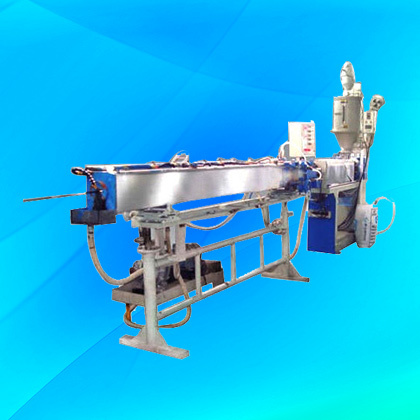
Rigid PVC Pipe Making Plant
1050000 INR
Product Details:
- Automation Grade Automatic
- Plastic Processed PVC Granules/Powder
- Usage & Applications PVC Pipe Production for Water Supply, Agriculture, Drainage & Conduit
- Model No RPVC-65, RPVC-75 (varies as per capacity)
- Frequency 50/60 Hz
- Accessories Vacuum Tank, Haul-off, Cutter, Stacker, Die Heads, Control Panel
- Motor Power 30-90 kW (main extruder)
- Click to View more
X
Rigid PVC Pipe Making Plant Price And Quantity
- 1 Piece
- 1050000.00 - 1050000.00 INR
- 1050000 INR
- 65 mm, 75 mm, 90 mm (depends on model)
- 16 mm to 315 mm
- Automatic/Oil Bath
- Single Screw/Conical Twin Screw
- Automatic, Planetary Cutter
- Available (optional)
- Automatic Feeding with Hopper Loader
- 1-2 persons
- Caterpillar Type
- Water Circulation System
- Below 75 dB (at 1 meter distance)
- 12-14 meters
- 4-7 Zones (independent temperature control)
- 1.2 mm to 12 mm
- On-Site Commissioning & Training
- Meets IS, ASTM, DIN standards
- Overload & Emergency Stop Protection
Rigid PVC Pipe Making Plant Product Specifications
- 55-150 kW (varies by model)
- PLC Based Panel
- Rigid PVC Pipe Making Plant
- Stainless Steel and High-Grade Alloy
- Automatic
- 80 kg/hr to 400 kg/hr
- Professional Installation Required; User Manual Provided
- Up to 200C process temperature
- 30-90 kW (main extruder)
- Automatic Extrusion Line
- Vacuum Tank, Haul-off, Cutter, Stacker, Die Heads, Control Panel
- 380-440 V
- Up to 22 m/min
- 4000-7000 kg
- Over 90%
- Servo/AC Motor
- 40-200 meters/hour (depending on pipe diameter)
- 12500 mm x 2500 mm x 2500 mm
- Yes
- Automatic
- Polished/Painted
- 45-120 kW/hr
- PVC Granules/Powder
- RPVC-65, RPVC-75 (varies as per capacity)
- PVC Pipe Production for Water Supply, Agriculture, Drainage & Conduit
- High Output, Low Maintenance, Energy Efficient, Robust Construction, Corrosion Resistant
- Blue & White
- Electric Motor Drive
- 50/60 Hz
- 65 mm, 75 mm, 90 mm (depends on model)
- 16 mm to 315 mm
- Automatic/Oil Bath
- Single Screw/Conical Twin Screw
- Automatic, Planetary Cutter
- Available (optional)
- Automatic Feeding with Hopper Loader
- 1-2 persons
- Caterpillar Type
- Water Circulation System
- Below 75 dB (at 1 meter distance)
- 12-14 meters
- 4-7 Zones (independent temperature control)
- 1.2 mm to 12 mm
- On-Site Commissioning & Training
- Meets IS, ASTM, DIN standards
- Overload & Emergency Stop Protection
Rigid PVC Pipe Making Plant Trade Information
- 1 Piece Per Month
- 1 Months
Product Description
Since our beginning, we are involved in offering Rigid Pvc Pipe Plant that are constructed as per the clients' specifications. This is manufactured by using best quality raw material under the guidance of our senior experts. Our offered range of plant is highly demanded owing to its high performance, sturdy construction and high durability. The provided range is easy to operate and has high productivity. Rigid Pvc Pipe Plant is also checked on various quality test parameters by our quality experts to maintain its best quality.
High-Efficiency Extrusion Technology
This PVC pipe plant features either a single screw or conical twin screw extruder engineered for high output and consistent product quality. With a production capacity of 80 kg/hr to 400 kg/hr and efficiency over 90%, it ensures rapid yet reliable manufacturing. The automatic feeding, pre-heating options, and precise temperature control further streamline operations, reducing manual intervention and power wastage.
Safety and User-Friendly Operation
Equipped with overload and emergency stop protection, the system prioritizes operator safety. The PLC-based panel and user-friendly interface simplify production management, requiring only 12 operators per shift. Automatic lubrication and easy maintenance design reduce downtime, while comprehensive installation guidelines and on-site training support local manufacturers.
Versatile Applications and Robust Construction
Built from corrosion-resistant stainless steel and high-grade alloys, this plant is suited for producing pipes for water supply, agriculture, drainage, and electrical conduit. Its robust construction, range of supported pipe thicknesses (1.212 mm), and compliance with global standards make it a reliable asset for diverse industrial needs. The inclusion of accessories such as vacuum tank, planetary cutter, and caterpillar haul-off ensures a complete, seamless pipe extrusion process.
FAQs of Rigid PVC Pipe Making Plant:
Q: How does the automatic feeding system improve the efficiency of the PVC pipe making plant?
A: The automatic feeding system uses a hopper loader to deliver PVC granules or powder directly into the extruder, ensuring consistent material flow and uniform melting. This automation reduces manual intervention, increases production speed, and contributes to overall operational efficiency.Q: What pipe diameter and thickness ranges can the plant manufacture, and are different applications supported?
A: The plant produces pipes with diameters from 16 mm to 315 mm and thicknesses between 1.2 mm and 12 mm. These specifications support a variety of applications such as water supply, agriculture, drainage, and electrical conduit, adhering to IS, ASTM, and DIN standards.Q: When is professional installation required for the extrusion line, and what support is provided?
A: Professional installation is mandatory for optimal performance and adherence to safety standards. The manufacturer provides comprehensive on-site commissioning and training, as well as a detailed user manual to ensure proper setup and operation.Q: Where can the rigid PVC pipe making plant be installed, and what is its required workspace?
A: Designed for industrial settings, the plant requires a workspace measuring at least 12.5 meters by 2.5 meters. Its robust construction and corrosion resistance make it suitable for installation in manufacturing facilities across India.Q: What benefits does the PLC-based control system offer to operators and managers?
A: The PLC-based control panel provides automated management of heating zones, extruder speed, and safety mechanisms. It simplifies operation, minimizes human error, and enables precise process adjustments, ensuring consistent output and reduced downtime.Q: How does the water circulation cooling system affect pipe quality and productivity?
A: The water circulation cooling system rapidly cools extruded pipes, maintaining shape integrity and dimensional accuracy. Efficient cooling supports higher production speeds and improves the overall quality of the finished pipes.Q: What noise level can be expected during operation and how does it impact the workspace?
A: Operating at under 75 dB (measured 1 meter away), the plant ensures a comfortable working environment, reducing noise pollution and the need for extensive soundproofing.Tell us about your requirement

Price:
Quantity
Select Unit
- 50
- 100
- 200
- 250
- 500
- 1000+
Additional detail
Mobile number
Email


Contact Us
OM ENGINEERING WORKS
GST : 07BLOPS0420C1ZD
GST : 07BLOPS0420C1ZD

- Kh. No. 581, Ground Floor, Street No. 25, Village Siraspur City, Delhi - 110042, India
- Phone : 07971190739
- Mr. Om Prakash Singh (Proprietor)
- Mobile : 07971190739
- Send Inquiry
- Mr. Kadam Lal
Mobile No: +918010868917
 Send Inquiry
Video
 Send Inquiry
 Send SMS
 Call Me Free
OM ENGINEERING WORKS
All Rights Reserved.(Terms of Use)
Developed and Managed by Infocom Network Private Limited.
Developed and Managed by Infocom Network Private Limited.

